Shanghai

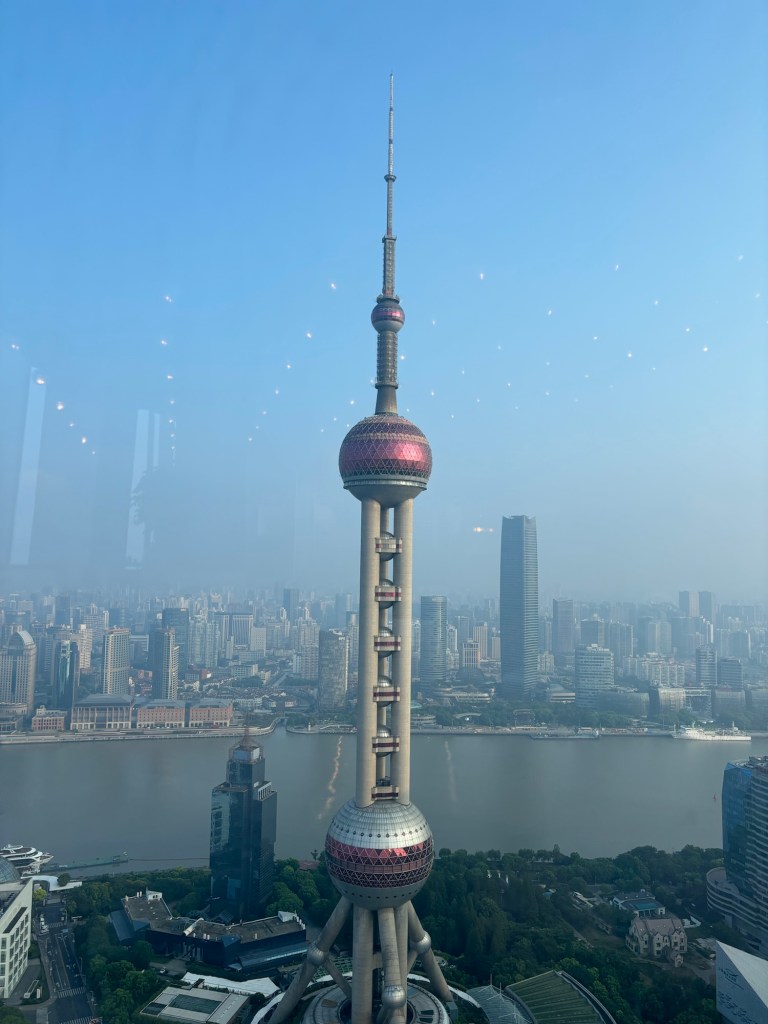
Shanghai Spire

So there I was, 40 floors up in one of Shanghai’s swankiest hotels, staring straight at the city’s iconic spire like it was challenging me to a staring contest. I got lucky this time—upgraded to a suite with multiple rooms and a jaw-dropping view of the Shanghai skyline. Below me, the Huangpu River was buzzing with cargo boats, and I couldn’t help but think back to its more infamous moment in 2013, when 16,000 pig carcasses floated downstream like some surreal, porky parade. Turns out, some farmers upstream decided the best way to handle a pork surplus was to send it straight downriver. Thankfully, that’s been sorted—although I can’t completely rule out an occasional bacon encounter if you’re bold enough to take a swim.

Shanghai is the definition of organized chaos. The traffic is heavy, but shockingly not apocalyptic like in some other major cities. And bikes? Oh, they’re everywhere. The bike lanes are protected by pillars and wire, so it’s like a VIP lane for cyclists, keeping them safe from the legions of electric cars zooming around. Speaking of cars, Tesla must have a Shanghai fan club because they’re everywhere, along with other Chinese electric brands. Regular old gas guzzlers seem like a rare species here, probably because you’ve got to sell your soul (and wallet) to afford a gasoline car tag. Motorcycles? Even worse. It’s a financial horror story just to get a tag for one of those.

One Tesla that caught my eye had a giant “Lady Driver” sticker above the bumper. As we passed her, I noticed this so-called “lady driver” was fully engrossed in her phone and paying zero attention to the road. I just hoped she was in autopilot mode. Oh, and here’s a fun fact: ambulances in Shanghai have the same sirens as back home, but everyone just ignores them like they’re the ice cream truck on a diet.

Now, Shanghai prides itself on being China’s most international city, and with 8,530 coffee shops (yes, I counted), it’s not hard to believe. A lot of those are Starbucks, though, which had a rough patch when they tried to Americanize their Chinese stores. Turns out, people weren’t thrilled about losing their local snacks. Cue the sacking of the country’s GM. They quickly brought back the pork buns and mooncakes, and voilà, business was booming again. KFC learned this lesson and adapted early. They’re serving oil sticks (basically a savory churro) and corn cups alongside their buckets of chicken. But even with all those options, I still haven’t found a good reason to set foot in a KFC while I’m here.

As I’ve said before, China has transformed in the last decade or so. WeChat, for instance, didn’t even exist 10 years ago, and now it’s the Swiss Army knife of apps—you can do literally anything with it. The city’s also a magnet for young people, thanks to its better job prospects and education. And let’s not forget, Shanghai is the city that never sleeps. How do I know? Because every night, the buildings are lit up like Christmas trees, and you can see people working all hours. I passed the famous Jing’an Temple (you know, the one where people donate so much that even the local government asks for loans), but sadly, my schedule didn’t allow for a stop.
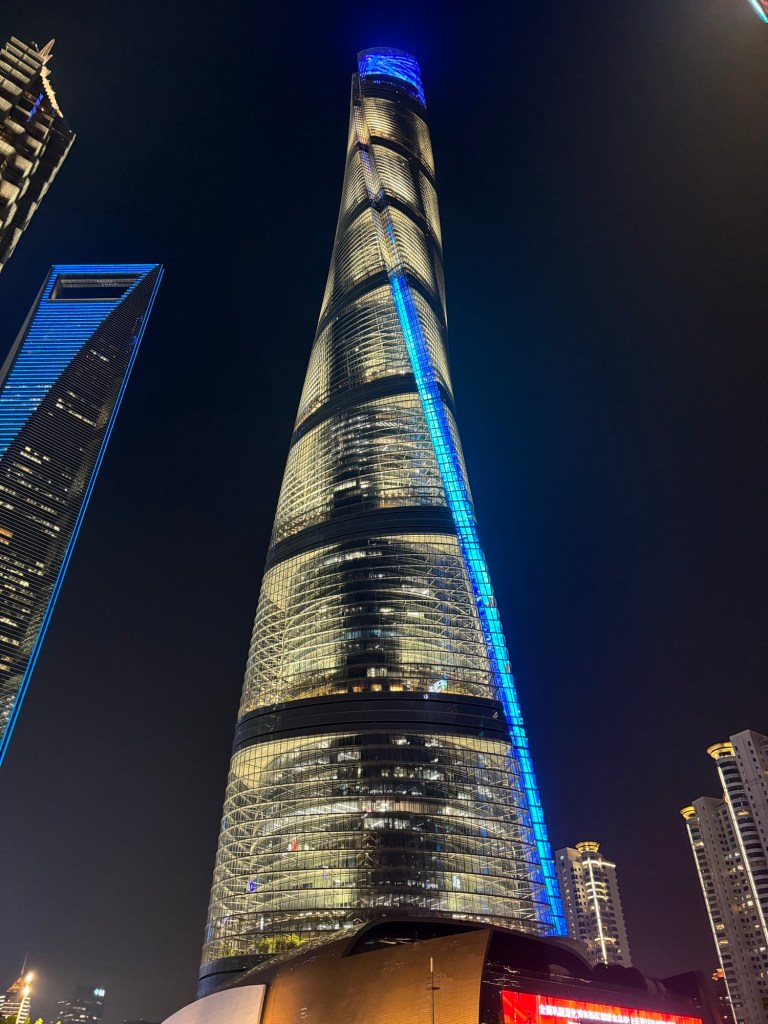
632 m high

My hotel was cozied up right next to the second tallest building in the world, standing a casual 632 meters tall. The name Shanghai is quite poetic: “Shang” means above, and “Hai” means ocean. It’s like a palindrome of geography: 上海自来水来自海上 (Shanghai’s water comes from the sea). And with a population of almost 25 million in the city alone, it feels like the entire ocean is in town.
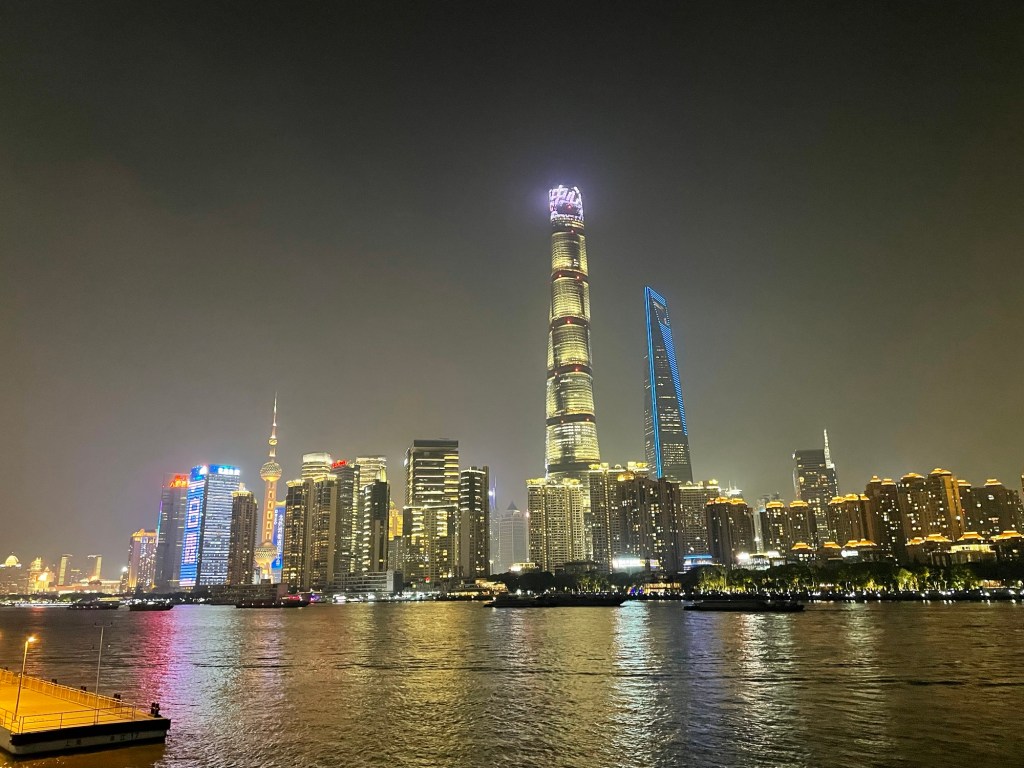
The famous Bund view

To top off my stay, we hopped on a boat and sailed down the Huangpu River toward The Bund. It’s the postcard version of Shanghai, with the glittering skyline on one side and the old town’s European charm on the other. We made our way to the famous morning-coffee-afternoon-booze street, where little bars lined the sidewalks. It was the perfect way to wrap up my short visit to this city above the ocean—though next time, I’ll skip the pig parade.

Suzhou, China

I’ve been to China a few times—mostly Beijing—but every trip has been great. One of my all-time highlights is, of course, the Great Wall near Beijing. It’s such a jaw-dropping marvel that each visit felt like meeting a new celebrity, only taller and with more bricks. I’ve gone three times! The first was a sunny day tour, but it was so packed with tourists, I had to hike miles just to be alone with this legendary structure. The second time, the cold and mist gave the Wall a spooky, “Game of Thrones” vibe. And my last trip? Hot, sunny, and deserted. It was just me, the Wall, and the knowledge that this thing is so big, you can see it from space. I felt like a tiny ant on the world’s most famous fence.

This time, I ventured to Suzhou for the 49th WSAVA World Congress. Suzhou, often dubbed “The Venice of the East,” is like if you mixed a Chinese watercolor painting with Silicon Valley—pretty gardens and tech hubs everywhere. And let’s not forget the canals! I’ve done Venice of the South (the real Venice), the North (Amsterdam), and now, I’m wondering if Venice of the West is… San Antonio? If so, check!

At the hotel, I wrestled with the Wi-Fi (as you do). After multiple tries, I went to reception where a nice guy tried to help. He typed my name, Jolle, but he spelled it out J…O…R…R…E. Gotta love the good ol’ “L” turned “R” trick that happens in Asia! We laughed, and voilà, internet!

The Great Wall in China
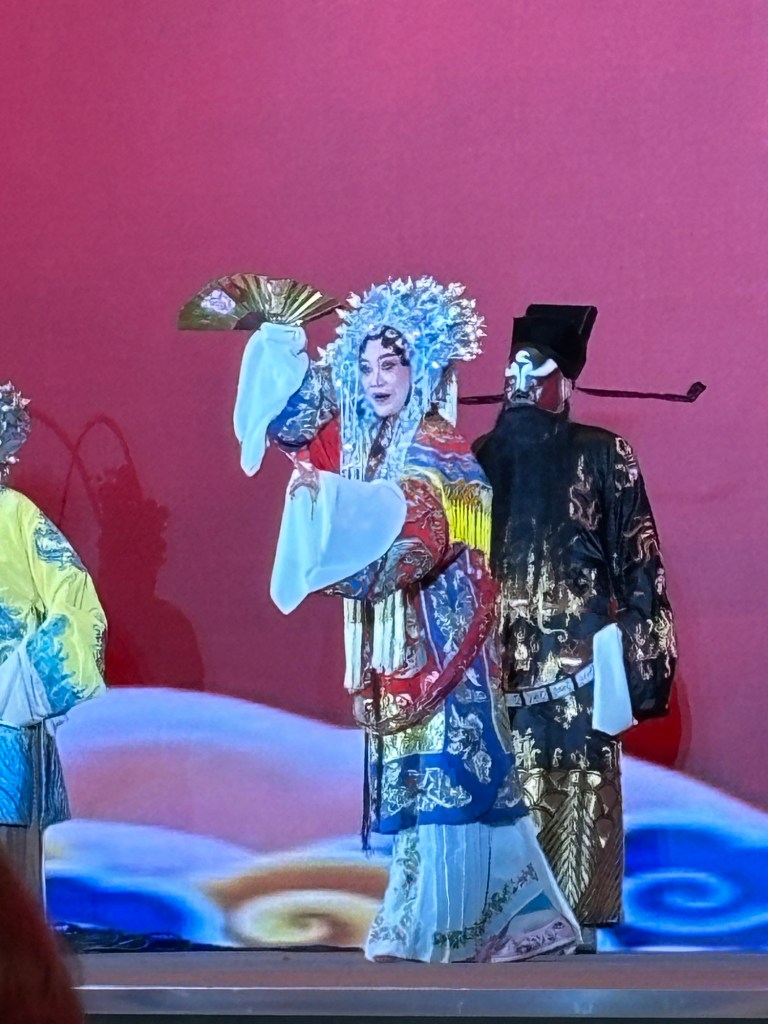
Chinese Opera

Suzhou isn’t just about canals; it’s also home to The Monkey King in Chinese opera. That character’s been doing flips since the Ming Dynasty. The opera’s based on a story where a monk, a monkey, and a pig face monsters (sounds like a very weird road trip, right?). Anyway, after much battling, they find eternal wisdom—like a monk’s version of “The Hangover,” but with enlightenment instead of regrets.

Now, on to Suzhou’s tech scene, which sits next to its ancient past like a flashy cousin who drives a Tesla. When I first went to Beijing, the smog was so thick you could cut it with a knife. Now, thanks to electric cars, the air’s clear enough to breathe, which is always a plus! Suzhou, with its Singaporean-planned tech park, is the perfect mix of old and new. But don’t be fooled by its polished exterior—this “small” town has 10 million people. It’s like if a quaint village ate New York City for breakfast.

And speaking of eating… let’s talk hairy crabs. Yes, they sound like something you’d avoid, but in Suzhou, they’re a culinary treasure. People flock to Yangcheng Lake during crab season like it’s a seafood version of Coachella. The crabs’ claws look like they’re wearing tiny mittens, and their meat is buttery heaven. Just don’t think too hard about the “hairy” part.

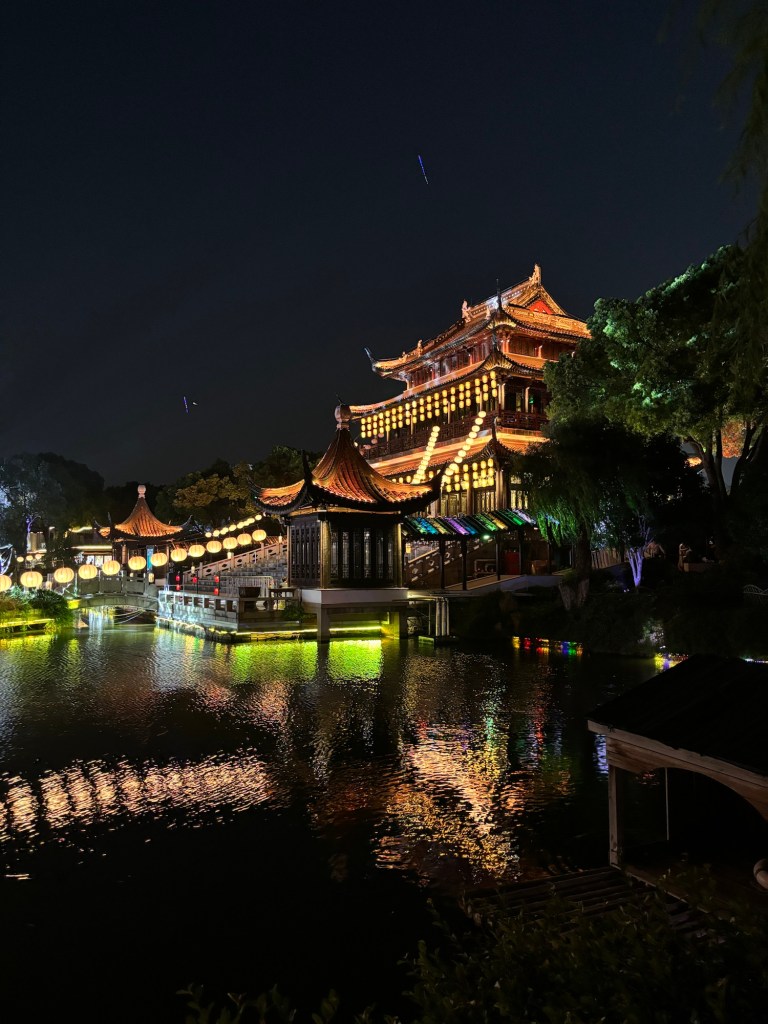
An old garden in Suzhou

To wrap up this story, Suzhou’s signature tree is the willow. I happen to have a willow at home named Paul (because I follow the “stick a twig in the water, and it grows” philosophy). My willow, much like me, faces demon challenges—mainly deer trying to eat it—but it’s hanging in there, wise and resilient. Just like life, right

Cancun

So here I am in Cancun, just a quick 20-minute jaunt from the airport, gearing up for our next Global Symposium.

The place is so off-season that the hotels are basically ghost towns—it’s like I’ve rented out the entire resort just for myself. In contrast, arriving at the airport is like walking into a carnival—only instead of performers, you’re surrounded by a swarm of overly enthusiastic tour operators all vying to whisk you away to your destination. It’s like an abundant all you can eat menu, with one traveler for every ten tour guides, all desperate to win your f(l)avor.

Most folks seem to have noped out of their vacation plans, spooked by the ominous warnings of a gnarly hurricane season, courtesy of our not-so-friendly pal, global warming.

This year’s hurricane season is shaping up to be a real overachiever, thanks to a cocktail of a half-hearted El Niño, Atlantic waters as hot as a summer BBQ, and trade winds that decided to take a vacation. With all that extra moisture in the air, it’s like Mother Nature cranked up the humidity and said, “Let’s see how many hurricanes we can whip up this year!” Buckle up—it’s going to be a wild ride!

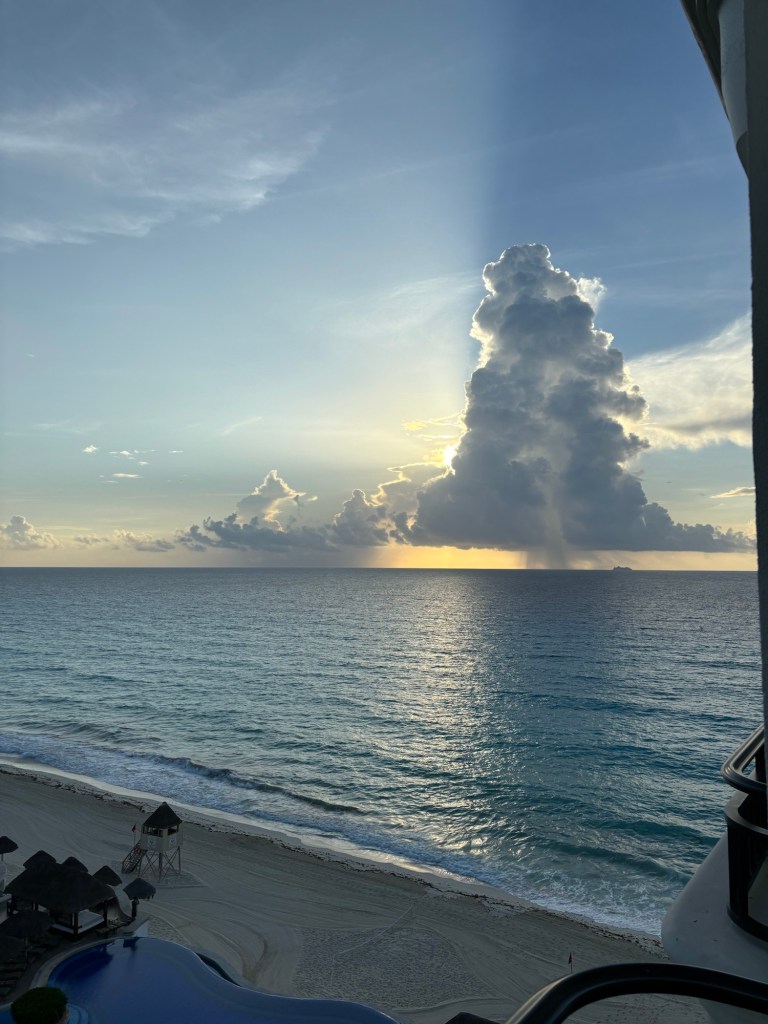
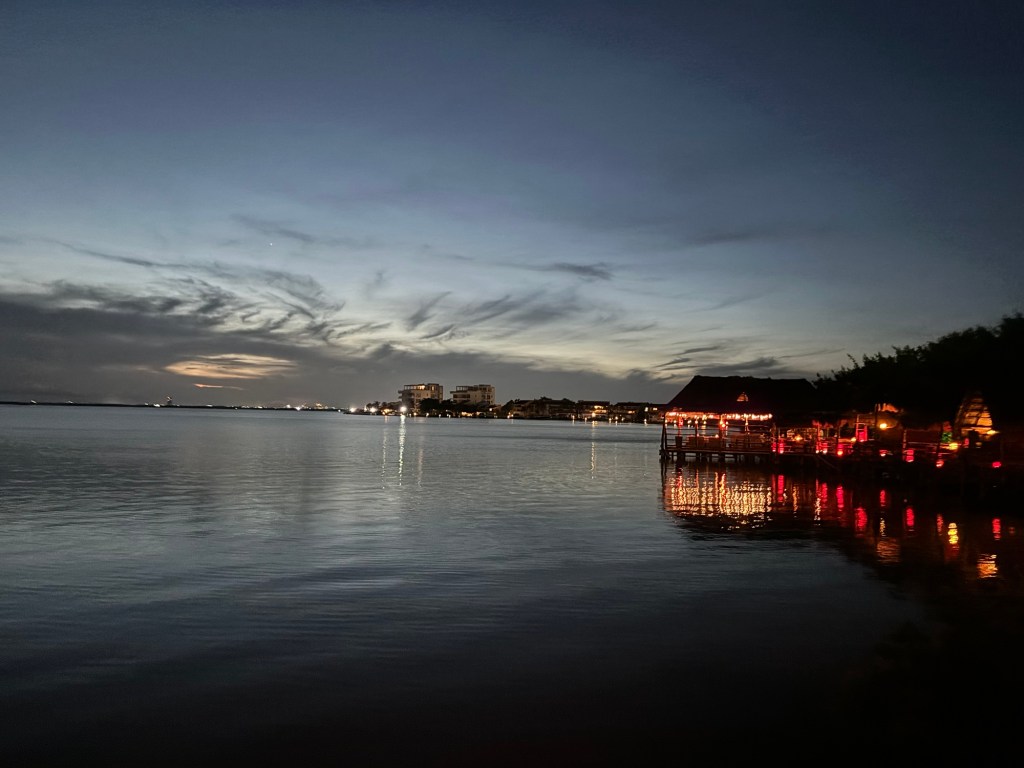
Cancun, by the way, is perfectly perched on the Yucatán Peninsula, where it gets up close and personal with the Caribbean Sea and the massive Nichupté Lagoon, a saltwater lake that’s practically an all-you-can-eat buffet for crocodiles with a taste for adventure—and, well, the occasional tourist.

The hotels here are cleverly tucked away on this slender peninsula, far from the city’s hustle and bustle. They’re working on a new bridge that should be ready by 2026, but for now, all we’ve got are these giant, lonely pilons sticking out of the water like some unfinished art project. The bridge is supposed to span the lagoon, but for now, people are sticking to swimming in the sea—probably because no one wants to be a croc’s mid-morning snack. These scaly fellows don’t shy away from a bit of human tapas, and every so often, one of them decides to switch things up and takes a dip in the sea. I can only imagine the confusion on their reptilian faces: “Wait a minute… where did all the fish go, and why is everything so extra salty?”

The locals, however, are totally unfazed. They paddleboard on the lagoon like they’re leading a croc parade, but I think I’ll stick to the sea, thank you very much.

Now, let’s talk about the food. I have a deep, abiding love for Mexican cuisine, and let me tell you, I’ve got a foolproof grading system for chips, salsa, and margaritas. Spoiler alert: this place aced it. They really know how to serve up some delicious local fish dishes that make you want to marry the chef.

The Hill’s Global Symposium is going to be a blast, especially since it’s being streamed to 30,000 people around the globe. The hotel’s Wi-Fi is so fast, I’m pretty sure they’ve got a direct line to the internet gods. The IT guy was practically bursting with pride when he told me, “No one beats us here!” The hotel itself is stunning, with all the amenities one could ever need.

But all good things must come to an end, and on my way back to the airport two days later, I find myself once again in the company of a small army of tour operators who, I assume, have gathered to see me off with tears in their eyes.

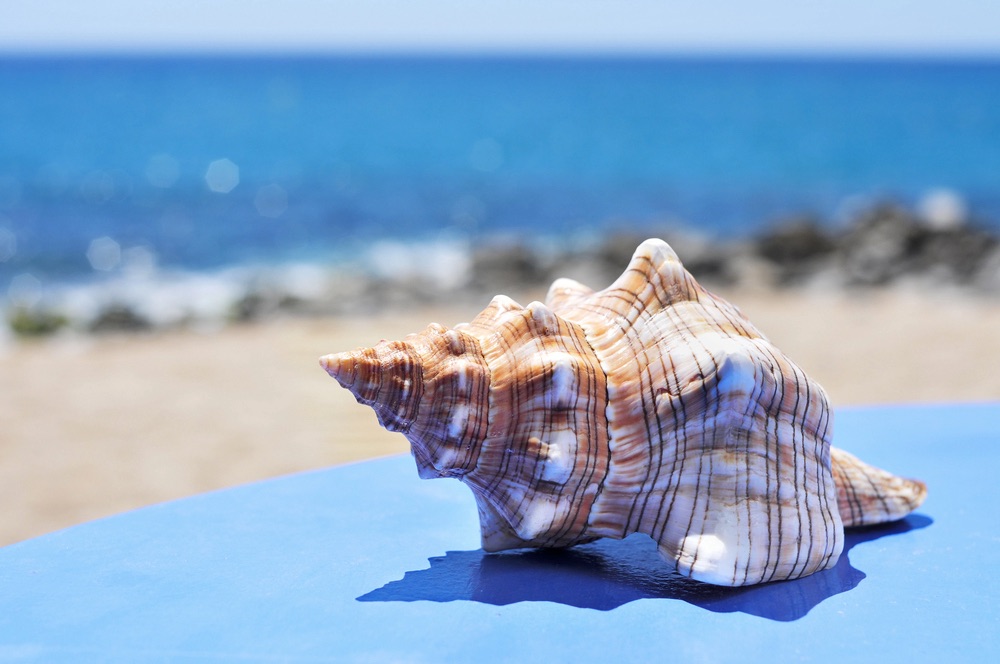
A conch

P.S. The lady’s face was priceless when the immigration officer unearthed a conch shell the size of my dog Chippie from her luggage. I bet she asked, “Can I take this back to the US?” and the officer, barely suppressing a smile, replied, “No ma’am, you most certainly cannot.” It was all smooth sailing—right up until she tried to smuggle half the ocean home with her.

Tasty Taiwan

When I stepped foot in Taiwan, I had to walk over a disinfection mat that instantly brought back memories of a Dutch congress I organized during the foot and mouth disease outbreak in Europe. Back then, the government decided that gathering veterinarians from all over the Netherlands—and beyond—would be just fine, as long as we all had a good scrub on those mats. Spoiler alert: it wasn’t. But here I am in Taiwan, an island fiercely guarding its borders from the world’s nastiest bugs, even if that means deploying an army of disinfection mats.

My first night in Taiwan? A total nightmare. I dreamt of a giant funnel-web spider, no doubt inspired by that Insta post I saw right before bed. This beast was enormous, with a black-and-white belly, luring its unsuspecting prey into its little webby lair. Now, I’m no dream interpreter, but I’m pretty sure that can’t be a good omen. It reminded me of my intern days when I got a call during night duty about a spider named Harry with an infected pedipalps (a spider’s pedipalps are a pair of appendages located near its mouth. They look somewhat like small legs, but they serve different purposes. In male spiders, the pedipalps are often used for reproduction, as they are adapted to transfer sperm to the female during mating. In both male and female spiders, pedipalps can also help manipulate prey, assist in sensing the environment, and play a role in feeding. They essentially function like small, multi-purpose “arms” for the spider). The owner had run out of antibiotics and wanted me to apply them to Harry’s belly. I agreed to an appointment, but the owner never showed. To this day, I’m convinced it was a prank pulled by one of my fellow interns. We were a mischievous bunch, but oh, the friendships that came out of it!

During this trip, I’m sporting a little red bracelet given to me by a young cancer survivor I met at the Ronald McDonald House. They do amazing work there, supporting families with kids battling cancer. We’re lucky enough to sponsor their two therapy dogs, who bring so much love to everyone they meet. “This bracelet beat cancer twice,” one mother told me. It’s a powerful reminder of resilience and hope.

101

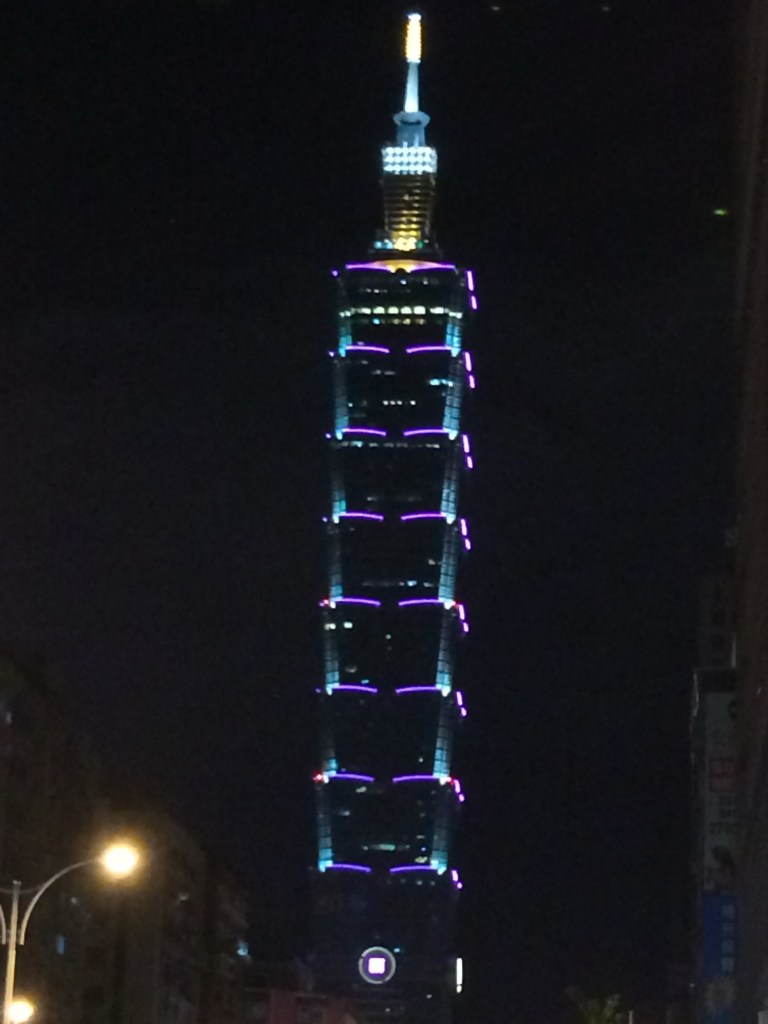
Just a few days ago, there was an earthquake in Hualien—par for the course in Taiwan, where the ground likes to keep everyone on their toes. My host assured me it wasn’t as big as the one in April, and while aftershocks are expected, the buildings here are built to handle even the mighty ones. Speaking of buildings, Taipei 101 once reigned as the tallest building in the world, but it’s since been dethroned to 15th place. Still, it’s a breathtaking part of the Taipei skyline and definitely worth a visit.

Over lunch, the conversation turned to favorite vacation spots, and my translator excitedly shared her plans to visit Norway. Originally, she had her heart set on Banff, but the cost steered her toward Norway instead. She’s hoping to see huskies in the snow, sleds and all, but then it hit her—there’s not much snow in September. No worries, though! She’s found a local husky gathering with 200 dogs. Just imagine 200 huskies howling at the moon! She’s beyond excited.

I’ve visited Taiwan a few times, mostly for lectures and conferences, and I’ve fallen in love with the food and, of course, bubble tea! Did you know you can customize it with five levels of sugar and five levels of ice? My host calls it “sophisticated,” though I think “complicated” might be more accurate. The food here is a true adventure, with flavors varying by region.

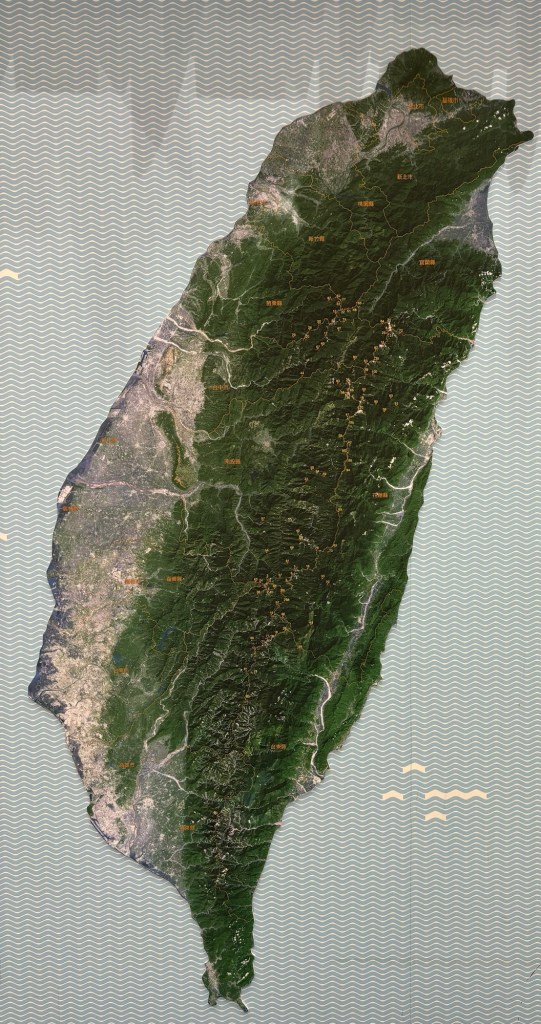
Taiwan might be small, but its tastebuds are mighty diverse. Some areas have a sweet tooth, with a sugary undertone to just about everything. Even the air feels sweet! There’s also an ongoing debate about how to prepare pyramid rice dumplings. Should you steam them like they do in the north or boil them as they prefer in the south? I’m told this disagreement is even more heated than the political divide!

The Queen’s Head

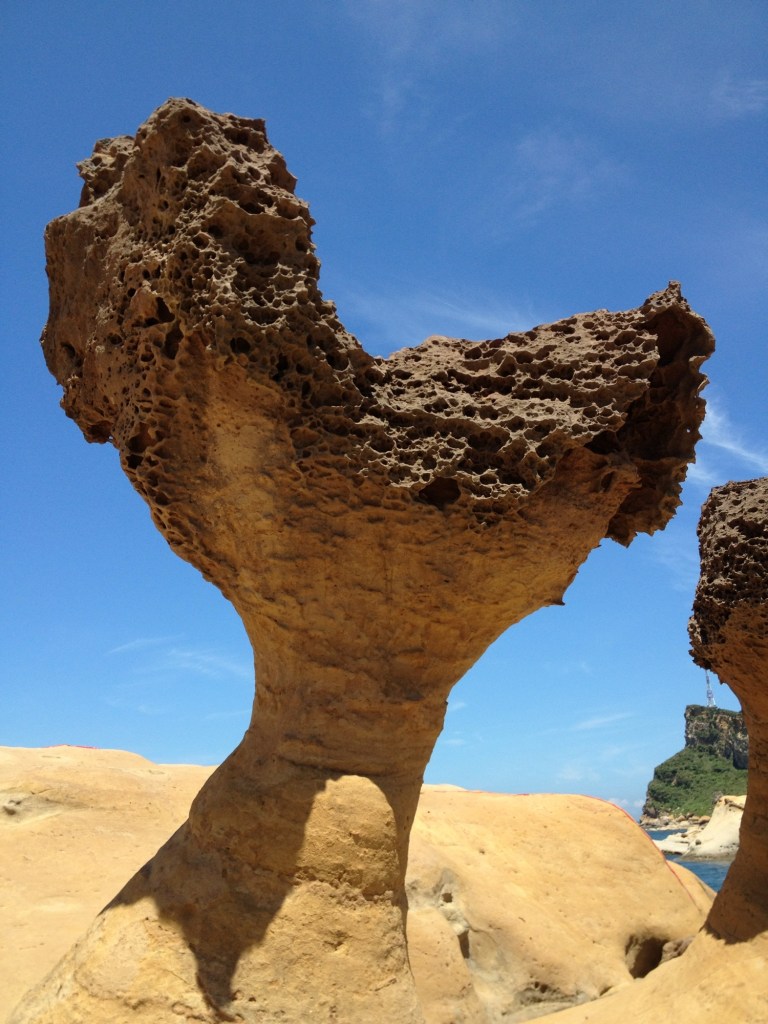
One of the highlights of Taiwan is the Queen’s Head rock formation. To me, it looks like Queen Nefertiti, with her elegant profile. It even has a live cam! Why, you ask? Because we’re all waiting for her neck to snap. Erosion has thinned it so much that it’s only a matter of time. It reminds me of Queen Mary of Taiwan—or maybe the Little Mermaid in Copenhagen, who lost her head a couple of times to pranksters before they finally installed a sensor to prevent any more shenanigans.

On my way back to the airport, I was mesmerized by the continuous smacking of my cab driver. He was going at that chewing gum like it was an Olympic sport. Funny side note: the pictures of cab drivers here look way younger than they really are. This guy looked about 12, smack smack. Maybe I should update my speaker photo next time too!

Malaysia

It is Durian season!

If you ever want to visit the moon, forget NASA—you just need to head to my hometown in the east of Malaysia, my host says. And that’s where the confusion begins. There’s an east, west, north, and south Malaysia—so far, so good—but then you also get an east of western Malaysia and a south… or maybe there isn’t? The longer we talked about it, the more tangled my brain got. But one thing’s clear: to see the moon, you’ve got to go east.

The roads there are so bumpy they’ll give you a lunar experience without the zero gravity—moon crater vibes, anyone? Plus, we’ve got the best noodles around! And trust me, they’re so good that even someone in my group chimed in, “You can’t find these anywhere else, not even in Kuala Lumpur!” We’re seriously considering starting an eastern noodle restaurant chain. The soup has the perfect blend of spices and a mysterious white-to-greyish hue that’s just as unique as the noodles, which, by the way, are a local Sabah specialty with Javanese roots.

And did I mention we have the tallest mountain in the country? It’s a whopping 400 meters! …Oh, wait, I Googled it—turns out it’s 4000 meters! The mountain is called Mount Kinabalu, and it’s like a giant canine tooth sticking up out of the earth. An earthquake recently gave it a bit of a makeover, which oddly enough reminded me of my first big project in vet school about canine fractures in police dogs. Those dogs bite with such force that their teeth often break, which, having been to the dentist for a broken molar myself, I can totally relate to. Fixing those teeth is tough—almost as tough as climbing that mountain!

Now, Malaysia’s got around 1.3 million cats and 700,000 dogs, which is pretty standard for a predominantly Muslim country. More cats than dogs, naturally. But I’m here to chat about something close to my heart: our perfect diets for common cat diseases, especially GI disease and megacolon. Megacolon, by the way, is a condition where the colon becomes abnormally enlarged and loses its ability to properly contract, leading to severe constipation or a complete blockage. This often results in a build-up of hard, dry feces, making it difficult and painful for the cat to pass stool. If left untreated, it can lead to serious health issues and may require surgical intervention in severe cases. Nutrition is absolutely crucial in the early stages of this disease and after the surgery.

The east of the west side, Malaysia is gorgeous

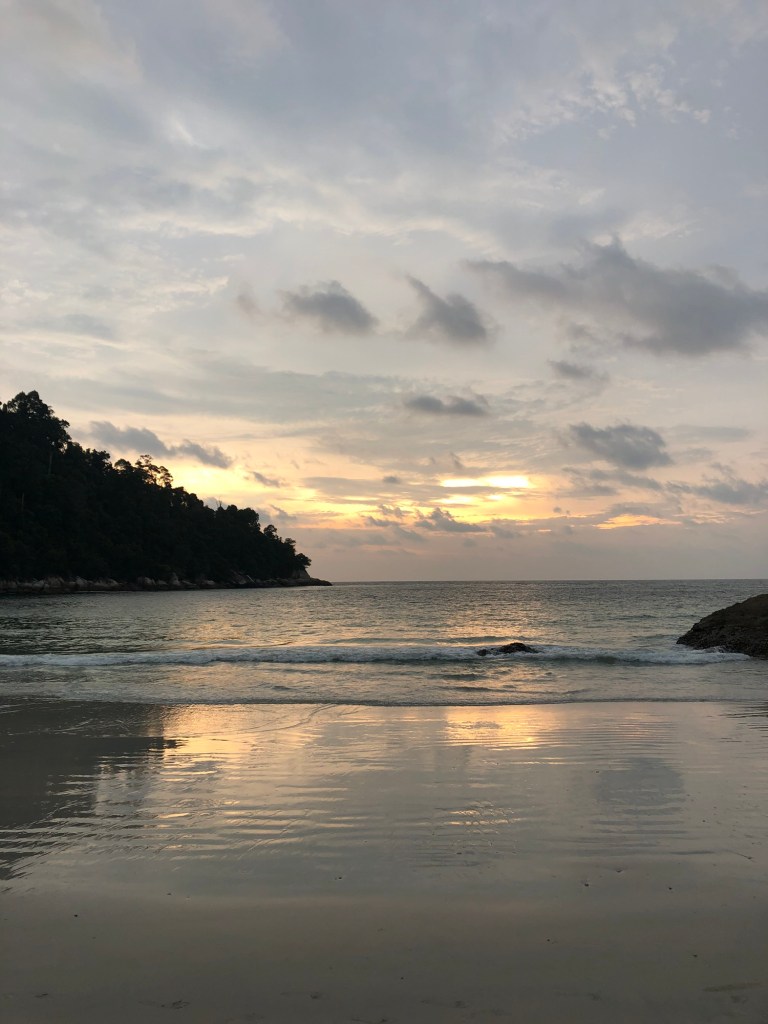
But let’s noodle back to noodles. Every region in Malaysia has its own noodle specialty. The northern part (of the west, I think?) is famous for its food with Thai influences, including Laksa. Down south, near Singapore, they’re known for Otak-Otak—a fish cake wrapped in banana leaves with a taste that’s simply chef’s kiss. And the eastern part of the west is all about beaches and the infamous king of fruits, Durian.

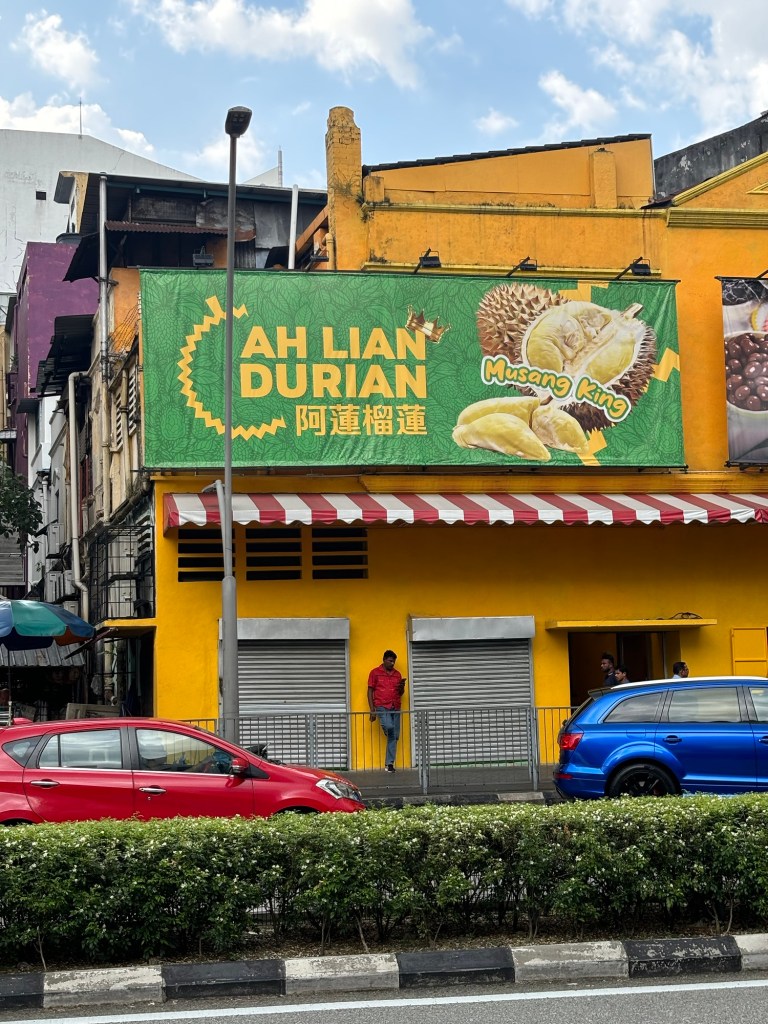
Oh yes, it’s durian season now, so the markets are filled with that delightful aroma of… raging diarrhea? People say that if you can ignore the smell, it tastes divine. I’m still working on that one. For now, this forbidden fruit remains firmly forbidden for me!