
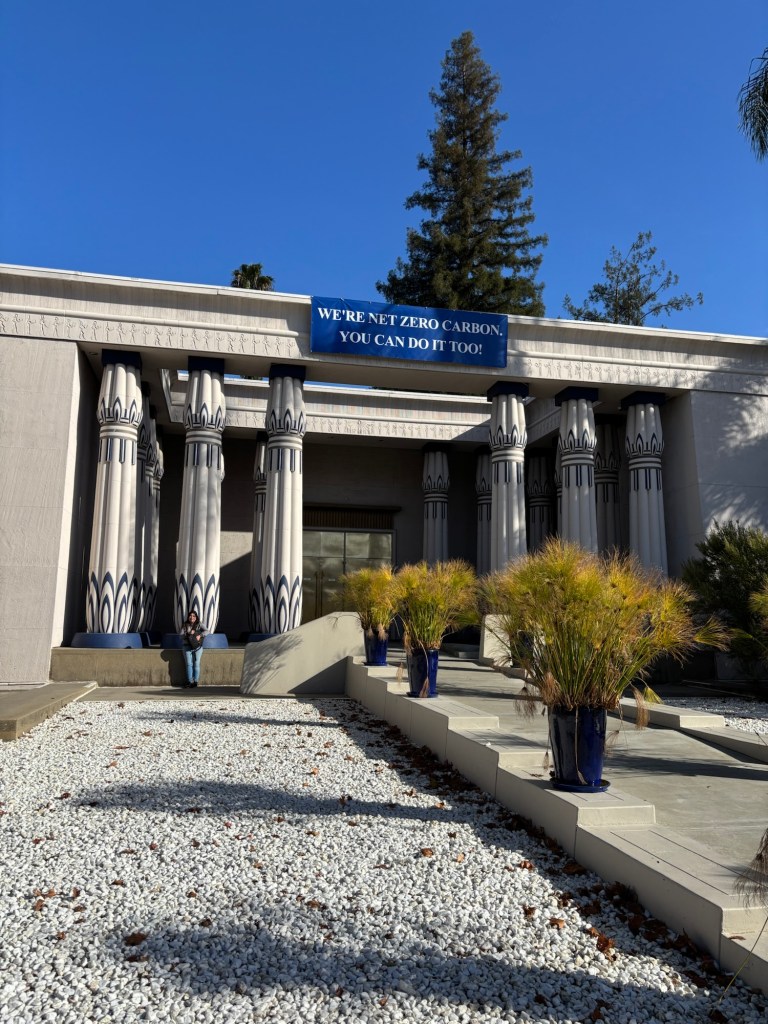
On my noble quest to see every major Egyptian collection in the world, the Rosicrucian Museum in San Jose was a must-visit. Now, the museum itself is tied to a somewhat quirky sect that’s into alchemy, but thankfully, the founder was also obsessed with ancient Egypt. Result? A surprisingly impressive collection of artifacts housed in what can only be described as a Vegas-style Egyptian building complete with a peace garden. Turns out, they funded multiple expeditions to Egypt, so their collection is legit.
My journey to this mysterious museum began with an Uber ride driven by Sayed, a lively older gentleman from Kabul. Normally, I pepper my drivers with questions about local hotspots, but Sayed wasn’t much for small talk—until I asked about his story. He shared that Afghanistan, before the war, was one of the most beautiful places on Earth. He worked for the U.S. embassy, which allowed him to escape before things went downhill, but his father and sisters are still stuck there. It’s heartbreaking—his sisters can’t work or get an education, and his father is paralyzed. Sayed’s doing what he can by sending money, but the situation sounded straight out of The Kite Runner. If you haven’t read it, add it to your list—just keep tissues handy.

As if Sayed’s story wasn’t enough to shake me, I also remembered a 7.0 earthquake that had recently hit Ferndale, California. Earthquakes and I don’t get along, ever since I lived through the Christchurch quake. When I asked Sayed about it, he shrugged it off, saying, “Happens every day here.” Reassuring, right? Nothing like a casual reminder that the ground beneath you is basically playing Jenga.
When I arrived in San Jose, the city was in full Christmas mode. Picture thousands of lighted fake Christmas trees, an ice rink surrounded by palm trees (the irony wasn’t lost on me), and crowds of families—a situation I typically avoid at all costs. But what caught my eye was a performance of The Nutcracker by the local ballet company. Naturally, I had to go.
The stage was… let’s call it “minimalist,” and the costumes, let’s say, lacked tailoring. Midway through, one poor kid’s pants dropped, and he was whisked offstage like he’d committed a crime. Still, the music was delightful, and everyone poured their hearts into it. The principal dancer—a sturdily built ballerino—was surprisingly graceful, proving you don’t need a stereotypical physique to nail a pirouette. Halfway through, they showered us with fake snow (read: soap bubbles), which added a magical touch—until I realized I was covered in foam.
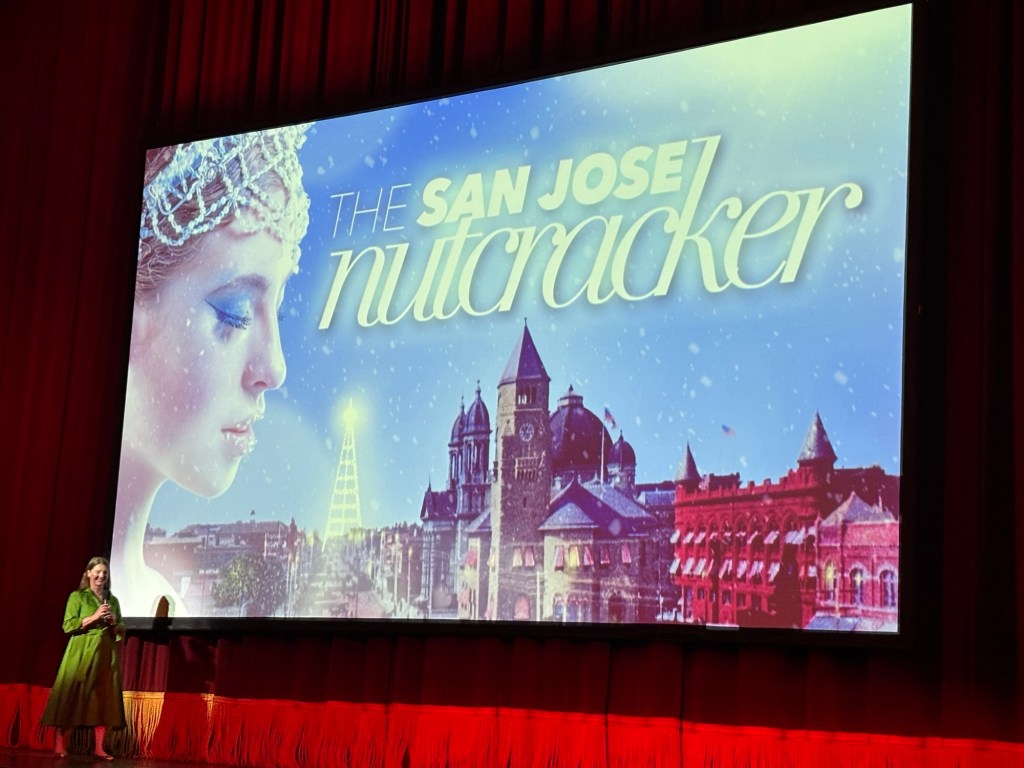
Curiously, this version of The Nutcracker was set in 1905 San Jose, a nod to the city’s historic light tower. Back then, the 237-foot tower, lit by 5,000 bulbs, stood like a giant Christmas tree over the city. Unfortunately, a 1915 storm sent it crashing down, and rusted bolts were the culprit. No one was hurt, but attempts to rebuild the so-called “Eighth Wonder of the World” were quickly nixed. Probably for the best.
Now, let’s talk about big hair. While I was waiting in the museum lobby, a woman with a towering Farrah Fawcett-style coif walked in and sat beside me. Her hair was so voluminous it could’ve had its own zip code. It brought back childhood memories of my mom, aunt, and grandmother, who used enough hairspray to single-handedly expand the ozone hole. Their hairstyles could withstand anything—except, perhaps, a monsoon.
The woman was soon joined by her daughter and aunt, both rocking equally enormous hairdos. I leaned over to my companions and whispered, “Is big hair back?” They nodded gravely. Apparently, this trend originated with Texas cheerleaders, who twirl through the air with hair so immovable it might as well be armor.
This got me thinking about ancient Egyptians, who were also big on big hair. The wealthier folks donned massive wigs—often atop their shaved heads—to assert dominance. Add a desert climate, no air conditioning, and zero deodorant, and you can imagine the aromatic consequences. Their solution? Wax cones perched on top of their wigs that melted slowly to release a pleasant scent. Ingenious for 1500 BC, but not exactly practical for modern cheerleading.
 Global Veterinary Surgery