
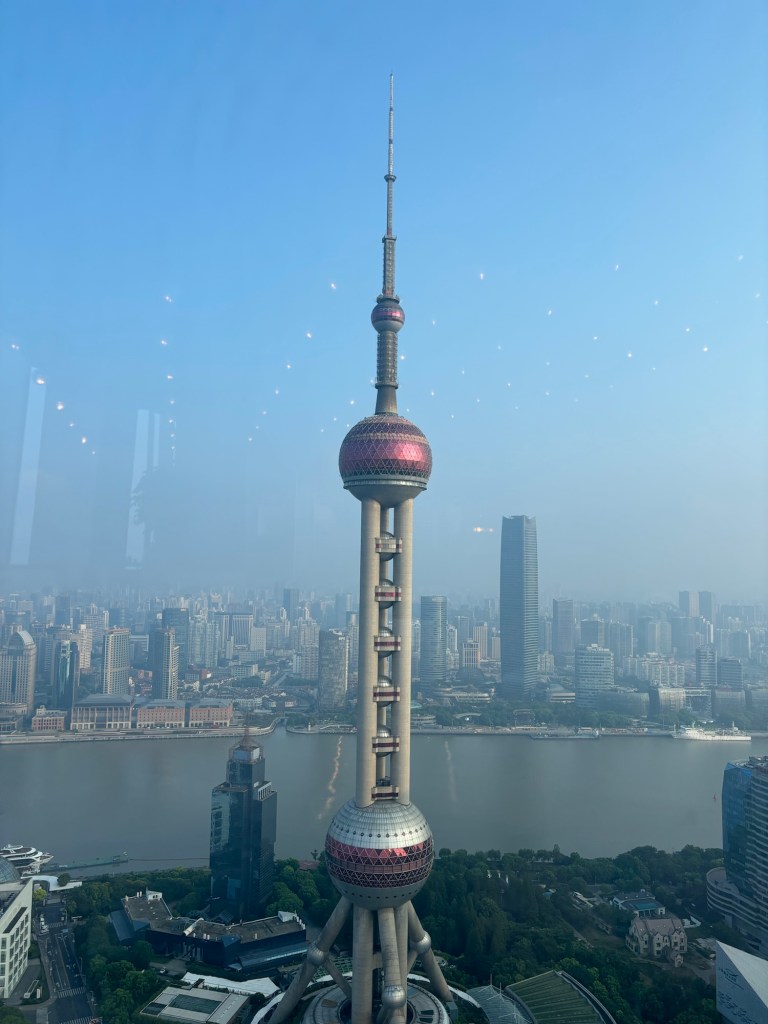
So there I was, 40 floors up in one of Shanghai’s swankiest hotels, staring straight at the city’s iconic spire like it was challenging me to a staring contest. I got lucky this time—upgraded to a suite with multiple rooms and a jaw-dropping view of the Shanghai skyline. Below me, the Huangpu River was buzzing with cargo boats, and I couldn’t help but think back to its more infamous moment in 2013, when 16,000 pig carcasses floated downstream like some surreal, porky parade. Turns out, some farmers upstream decided the best way to handle a pork surplus was to send it straight downriver. Thankfully, that’s been sorted—although I can’t completely rule out an occasional bacon encounter if you’re bold enough to take a swim.
Shanghai is the definition of organized chaos. The traffic is heavy, but shockingly not apocalyptic like in some other major cities. And bikes? Oh, they’re everywhere. The bike lanes are protected by pillars and wire, so it’s like a VIP lane for cyclists, keeping them safe from the legions of electric cars zooming around. Speaking of cars, Tesla must have a Shanghai fan club because they’re everywhere, along with other Chinese electric brands. Regular old gas guzzlers seem like a rare species here, probably because you’ve got to sell your soul (and wallet) to afford a gasoline car tag. Motorcycles? Even worse. It’s a financial horror story just to get a tag for one of those.
One Tesla that caught my eye had a giant “Lady Driver” sticker above the bumper. As we passed her, I noticed this so-called “lady driver” was fully engrossed in her phone and paying zero attention to the road. I just hoped she was in autopilot mode. Oh, and here’s a fun fact: ambulances in Shanghai have the same sirens as back home, but everyone just ignores them like they’re the ice cream truck on a diet.
Now, Shanghai prides itself on being China’s most international city, and with 8,530 coffee shops (yes, I counted), it’s not hard to believe. A lot of those are Starbucks, though, which had a rough patch when they tried to Americanize their Chinese stores. Turns out, people weren’t thrilled about losing their local snacks. Cue the sacking of the country’s GM. They quickly brought back the pork buns and mooncakes, and voilà, business was booming again. KFC learned this lesson and adapted early. They’re serving oil sticks (basically a savory churro) and corn cups alongside their buckets of chicken. But even with all those options, I still haven’t found a good reason to set foot in a KFC while I’m here.
As I’ve said before, China has transformed in the last decade or so. WeChat, for instance, didn’t even exist 10 years ago, and now it’s the Swiss Army knife of apps—you can do literally anything with it. The city’s also a magnet for young people, thanks to its better job prospects and education. And let’s not forget, Shanghai is the city that never sleeps. How do I know? Because every night, the buildings are lit up like Christmas trees, and you can see people working all hours. I passed the famous Jing’an Temple (you know, the one where people donate so much that even the local government asks for loans), but sadly, my schedule didn’t allow for a stop.
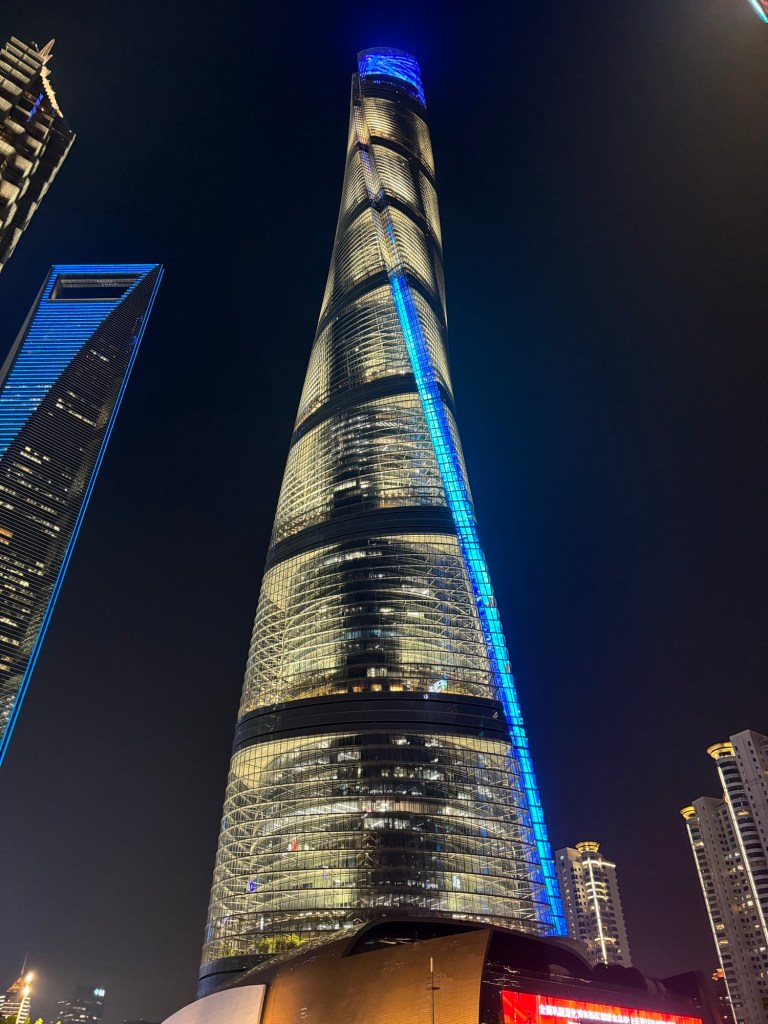
My hotel was cozied up right next to the second tallest building in the world, standing a casual 632 meters tall. The name Shanghai is quite poetic: “Shang” means above, and “Hai” means ocean. It’s like a palindrome of geography: 上海自来水来自海上 (Shanghai’s water comes from the sea). And with a population of almost 25 million in the city alone, it feels like the entire ocean is in town.
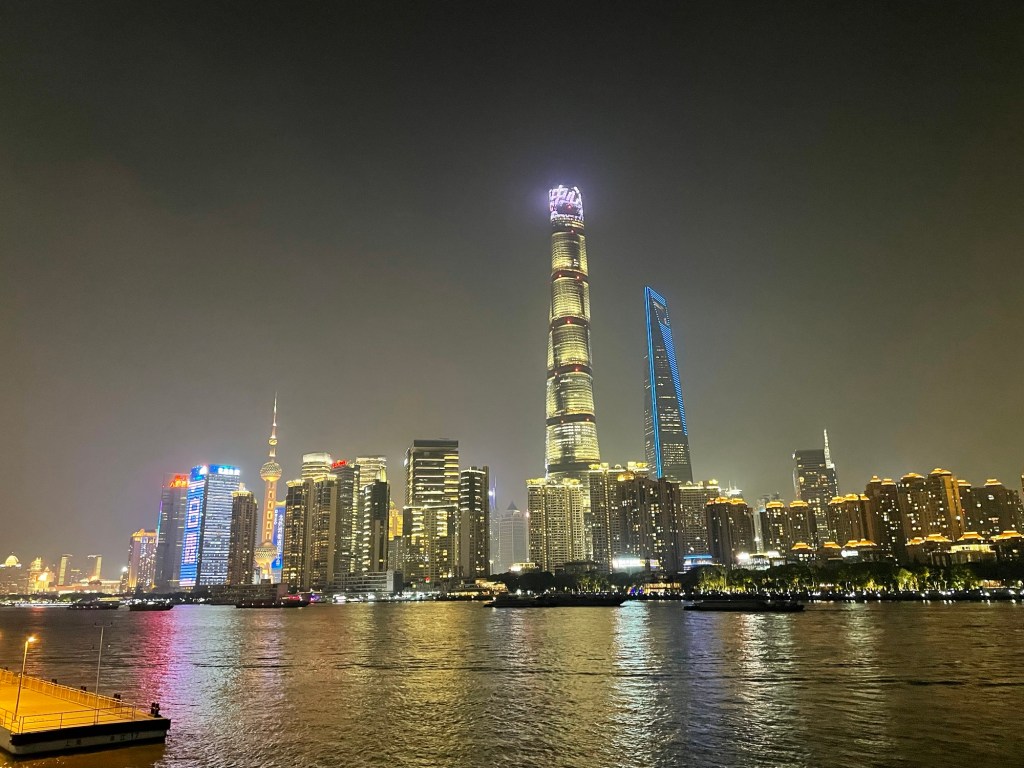
To top off my stay, we hopped on a boat and sailed down the Huangpu River toward The Bund. It’s the postcard version of Shanghai, with the glittering skyline on one side and the old town’s European charm on the other. We made our way to the famous morning-coffee-afternoon-booze street, where little bars lined the sidewalks. It was the perfect way to wrap up my short visit to this city above the ocean—though next time, I’ll skip the pig parade.
 Global Veterinary Surgery