
I had nothing to do with cows. Growing up, cows were a distant idea, something I saw in passing fields. My real introduction to these bovine creatures came during high school when I joined a local veterinarian on some externships. That experience shifted my dreams from becoming a fighter pilot to aspiring to be a veterinarian. But fate has its quirks. At 18, despite my good grades, I was unlucky in the lottery system used for veterinary school admissions. So, I decided to study history and had the best gap year ever—little studying and lots of fun extracurricular activities.
The next year, luck smiled on me, and I finally got into veterinary school. That’s when my interest in cows really took off. I even took a course on cow hoof trimming in the Netherlands, although waking up at 3 am wasn’t my favorite. Despite my burgeoning passion for cows, I decided to be practical and focused on small animals instead.
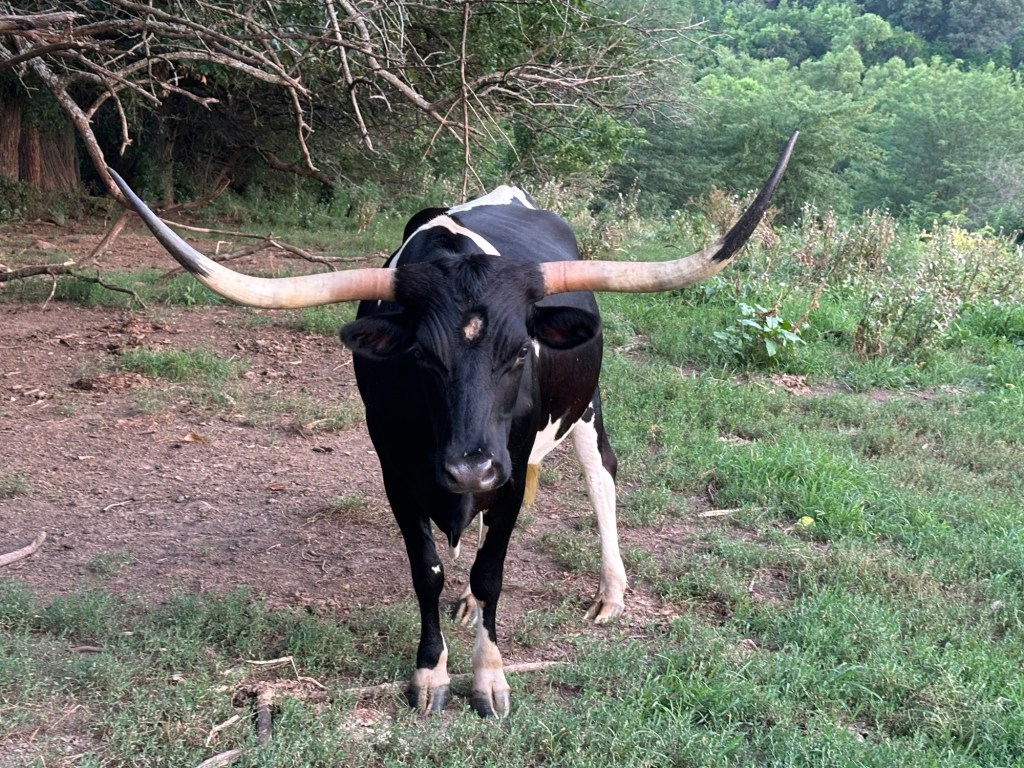
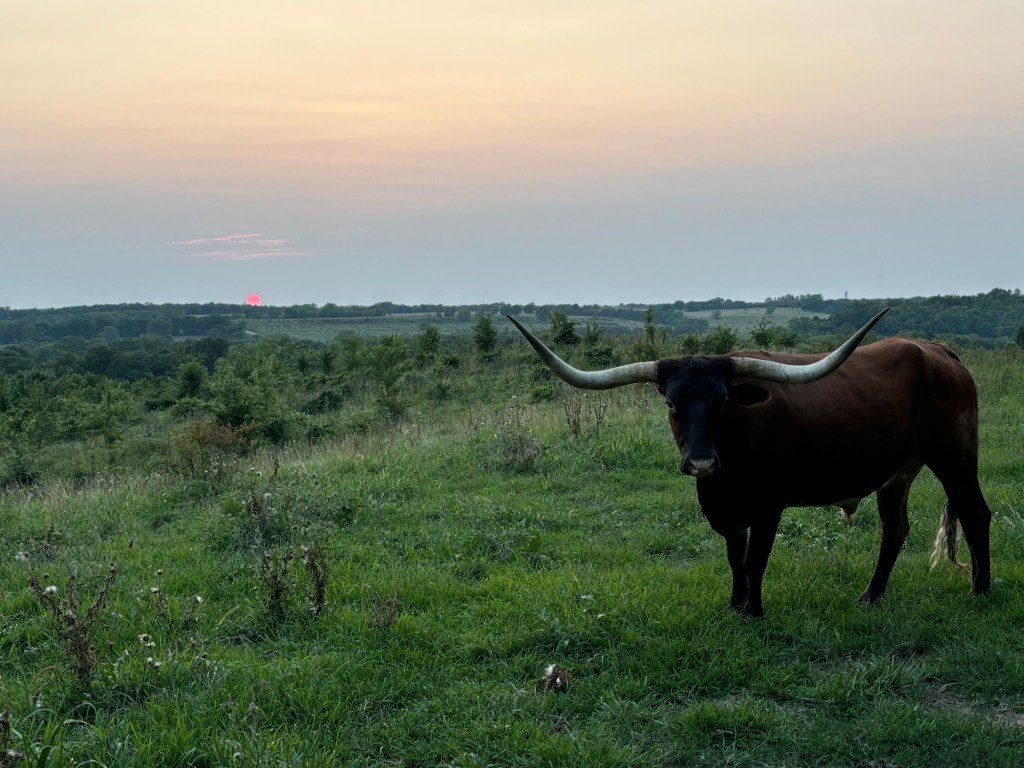
Fast forward fifty years, and I found myself on a farm in the middle of nowhere in Kansas. This place, with its log cabin reminiscent of Yellowstone, had been in the owner’s family for over 180 years and was now a popular wedding venue. Off the grid in every sense—no phone or internet—this farm had 81 Texas Longhorns, not counting the calves. The owner was always talking about reducing the herd, but it only seemed to grow.
One memorable event involved the cows breaking out of their pasture and mingling with a wedding party, much to the initial alarm but eventual delight of the guests. The groom took it in stride, creating what he claimed were the best wedding photos ever. Eventually, the owner decided to cull the herd, calling a neighbor to take away most of the cows. But her resolve wavered, and each day the number she wanted to keep increased until she gave up on the idea entirely.
Texas Longhorns are fascinating creatures. Their horns can span over eight feet, and their diverse coloring means no two are alike. They thrive in hot weather and can endure cold winters, needing only holes cut in the ice for drinking during freezing temperatures. Descended from cattle brought by Spanish conquistadors, they are resilient and well-suited to the Kansas climate.
Driving back on the dusty roads of the Kansas Flint Hills, I couldn’t help but reflect on my almost-cow career. It may not have brought me here to Kansas with their majestic Longhorns, but who knows what might have been? Dusty roads, hot weather, and the open expanse of nowhere—a fitting backdrop for reminiscing about a life touched by the unpredictable charm of cows.
 Global Veterinary Surgery